

Platform model
The missing middle between lab-stage and venture-scale
This is commercialization infrastructure — not a “coworking” space, and not a passive incubator. The objective is to pair right-sized tenancy with shared production-grade capability so teams lease less space, burn less on idle tools, and spend more cycles on engineering risk reduction.
Shared infrastructure is built with the ecosystem that is already here and for the gaps that still block growth — so companies can thrive in the market, not only survive the next milestone. Those stacks sit inside one shared ecosystem, and the benefit compounds regionally, nationally, and globally as partners connect across hubs. When members can see adjacent technologies clearly, partnerships become practical — joint pursuit of grants or programs of record, or combined capabilities that meet consortium and government needs in novel ways a single firm would find hard to justify alone — with talent, IP, and university capability woven in lightly.
Those same vertices inform consortium themes, scheduling, and cohort selection across hubs. Programming supports that work through matchmaking and curation — surfacing the companies, technologies, and talent most relevant to consortium members’ needs and demands.
An operating entity coordinates tenancy, shared equipment, programming, and partnerships — structured so public capital can help unlock enabling infrastructure while operating revenue, memberships, and sponsorship sustain long-term independence.
Each hub is embedded in its region so collaboration can run across municipalities, universities and trade schools, startups, corporates, investors, service providers, nonprofits, and federal programs — without forcing everyone into one template.
- Tenant Sub-Leases Fair-market and structured sub-leases with optional equity alignment where it accelerates outcomes — selective curation keeps the floor aligned with technical throughput.
- Corporate Consortium Annual membership for roadmap-aligned programming, diligence lanes, and cross-node introductions — structured so startups retain tempo.
- Memberships From office space to hot desk style access with either regional or network level access to our nodes. All memberships have optional add-on tiers for preferred pricing and priority access to shared equipment.
- Programming Accelerators, hackathons, and build sprints co-developed with industry, university, and nonprofit partners. Programming will also be designed & facilitated exclusively for our premium Consortium members.
- Events & Summits Hosted networking events, workshops, investor summits, government roundtables, and industry job fairs.
- Equipment Access Hourly and project-based access to regional and network level resources and capabilities — CNC, additive, laser, and metrology blocks — driving utilization while accelerating TRL and MRL maturity speed.
Stakeholders
Why each constituency backs network-scale infrastructure
Founders gain production-grade adjacency without absorbing full equipment depreciation, plus peer density that accelerates integration across mechanical, electrical, and systems work. The goal is to shrink the capital penalty of the missing middle so teams stay focused on technical de-risking — not landlord gymnastics.
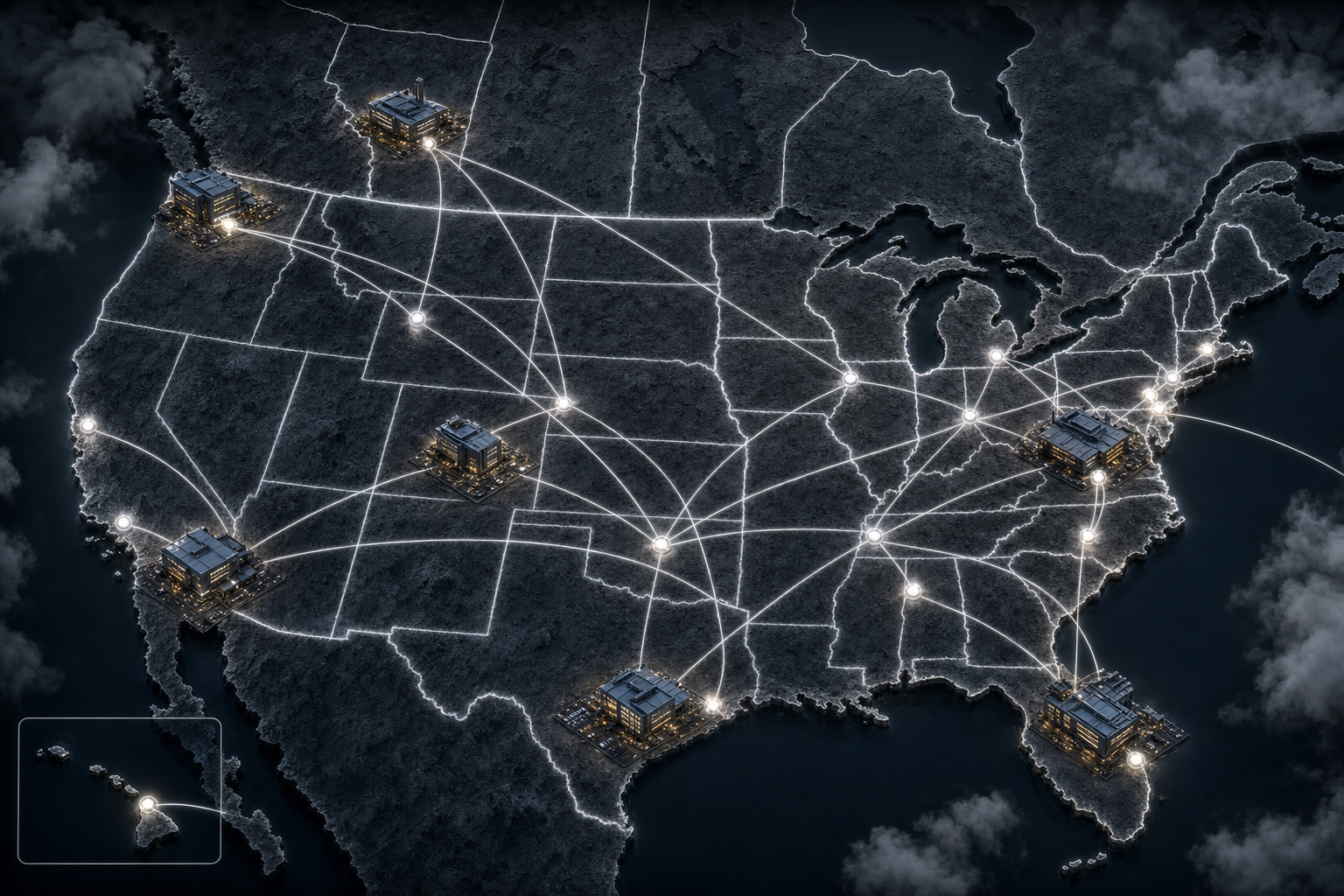
Ignition Point Labs begins with what a place already has — labs, suppliers, workforce rails, incentives — and starts from an inside view of what already works and who is working on what. Shared capabilities and deliberate governance let corporates, startups, universities, service providers, and public partners collaborate fluidly without conflicting incentives.
Tenancy, equipment, and programming are designed so they compound local infrastructure instead of competing with it — a regional operating rhythm where introductions graduate into supplier qualification, process yield improvement, and repeatable manufacturing motion, and where collaboration runs steady enough that scorekeeping matters less than shared throughput.
Identify what exists
We inventory who the players are, what resources are in play, and what is actually working in the region — not anecdote. We then name what is missing, what is broken, and what is not working so the hub can fill gaps instead of duplicating what already works under a different logo.
Outfit the facility for what the region builds
We shape tenancy and shared capability around the startups, industries, and milestones that define that place: closing tooling and test-equipment gaps, expanding access to specialized workflows, and keeping capex off teams until revenue can carry it. Capability is available to the broader market and region; lessees, members, and partners receive priority scheduling and specialized pricing.
Access across hubs
Playbooks, supply chain introductions, shared capabilities, and membership benefits travel between nodes so teams can reuse what already works elsewhere — without flattening what makes each region distinct.
Ecosystem discovery
The region defines the build
We make it a point to sit down with every constituency that already shapes outcomes on the ground — and to outline, in detail, the resources, incentives, and dynamics in play across the surrounding cities and the state itself. That work is not a slide-deck exercise; it is how we learn what is real today.
- Municipal & regional partners — surrounding cities, counties, ports, and economic-development lanes aligned to industrial growth
- State government & programs — workforce, incentives, procurement, and policy rails that help or hinder scale-up
- Universities & colleges — research labs, tech transfer, talent pipelines, and the programs that feed company creation
- Nonprofits & community organizations — workforce access, inclusion, and the institutions that hold regional trust
- Accelerators & incubators — what is already operating, who they serve, and where their graduates stall
- Startups & spinouts — active teams, TRL/MRL reality, and the capital or tooling gaps blocking the next milestone
- Regional corporates — anchor employers and primes in the industries that define that place
- Extra-regional corporates — national and global players foundational to those same industries, even when they are not headquartered locally
- Service providers & suppliers — the manufacturers, integrators, and specialty shops that support the bigger players across those stacks
- Investors & capital partners — angels, strategics, lenders, and funds already active in the corridor
- Federal & national adjacency — labs, programs of record, and consortia where regional work must plug in credibly
And the partners we have not named yet — every market has its own cast.
The objective is explicit: identify what exists, what is working today, and what is already in place — then map friction points, gaps, and what is simply broken. Only after that picture is legible do we act as the connective tissue: everyone belongs in the conversation, and our facilities are designed to weave those relationships and resources together.
We are not here to drop another shiny idea into a random market. We grow, evolve, and expand the existing ecosystem so it functions as a true ecosystem — with shared infrastructure that compounds what already works instead of competing with it under a new logo.
The information we gather defines the space and the model we bring to that particular region. The market defines the outcome — we carry a proven network template, but it molds to each market's unique resources, relationships, and needs.